16 May 25 One History – Many Stories

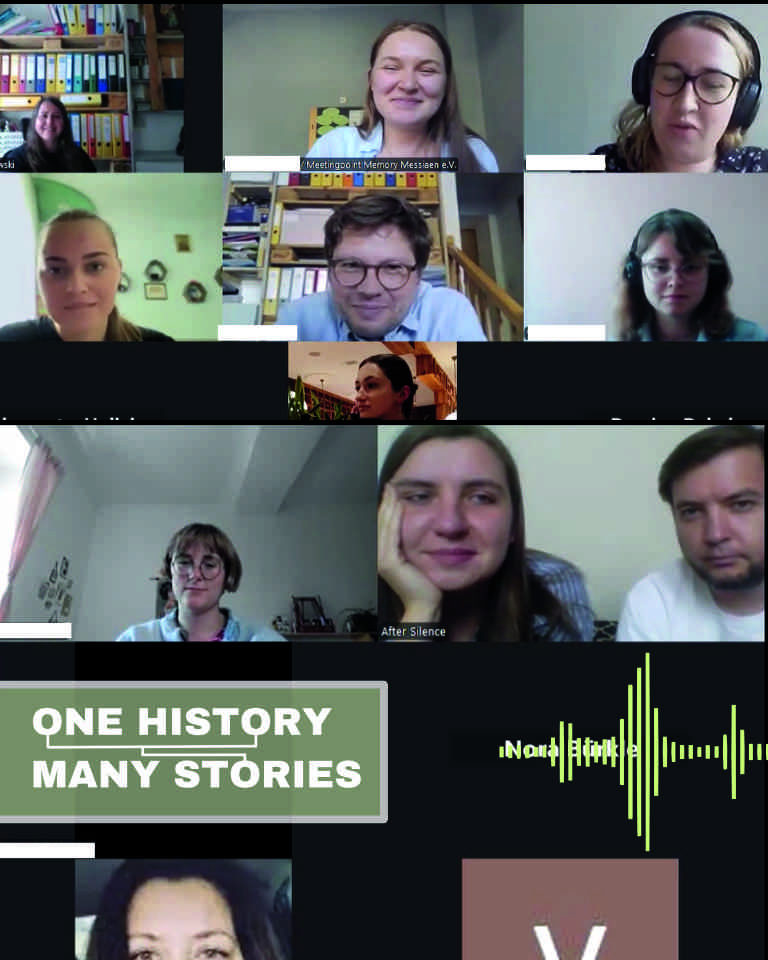
Leading up to our project “One History – Many Stories. Summer School on WWII Forced Labour and Public History” we had the opportunity to learn how to conduct interviews with contemporary witnesses and to work with various historical archives.
The main idea was for every participant to research their own family history connected to WWII forced labour and its victims.
The workshops were led online by historians Anna Jatchenko and Andrij Ucatch from Після тиші – After Silence, our Lviv-based partners.
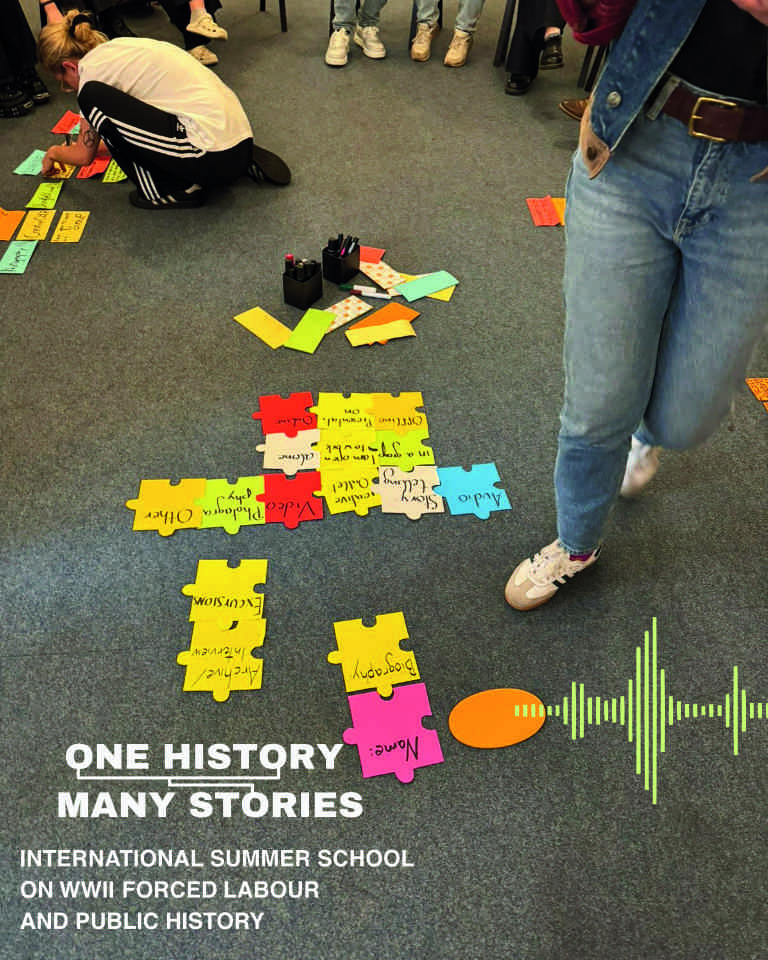
Our project kicked off with our group of young people from Ukraine, Poland and Germany coming together in GörlitZgorzelec. We focused on the layout of the individual projects, which will be developed on the basis of biographies of forced labourers.
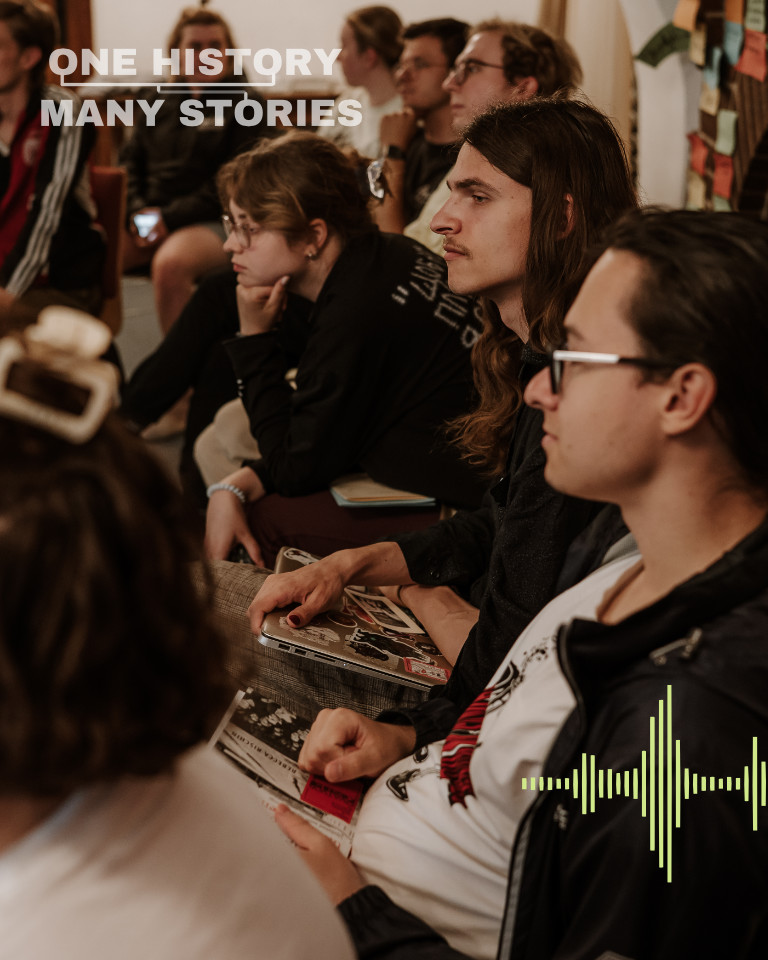
During our programme we had the chance to receive information and be inspired by historical and artistic inputs as well as visits to different places and memorial sites of forced labour.
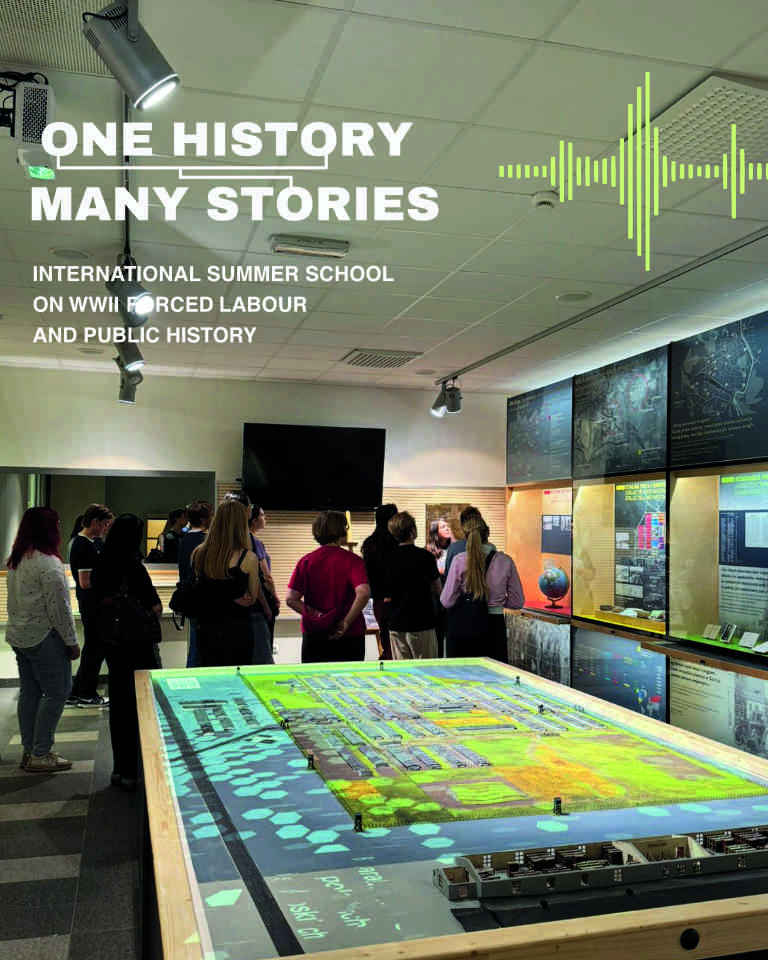
The memorial site Stalag VIII A was the starting point of our work. We not only visited the site but also engaged deeply with its history, focusing on individual biographies of the prisoners. The guided tour was led by Alexandra Grochowski, head of Meetingpoint Memory Messiaen e.V.
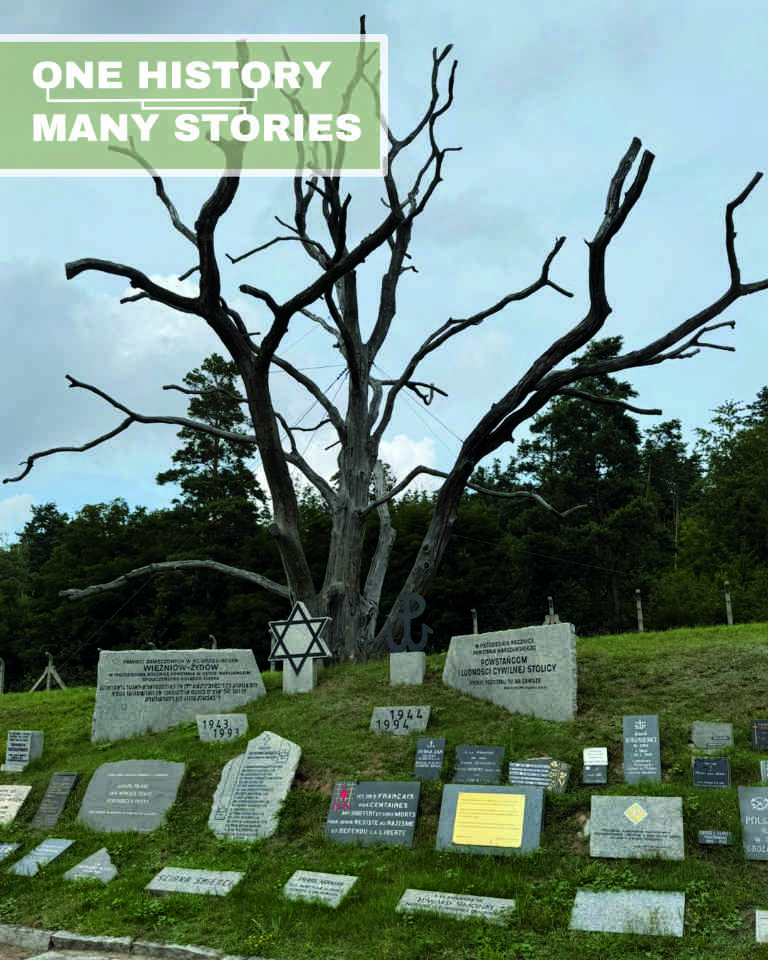
We concluded the morning by commemorating the victims of the camp at the nearby cemetery of Soviet prisoners of war.
During the workshop “My ‘picture’ of WWII,” our volunteer Luzie Kothera encouraged the group to reflect on where their knowledge of WWII comes from—family stories, school education, or experiences connected to memorial sites. The workshop helped reveal differences in historical narratives and perspectives between nations.
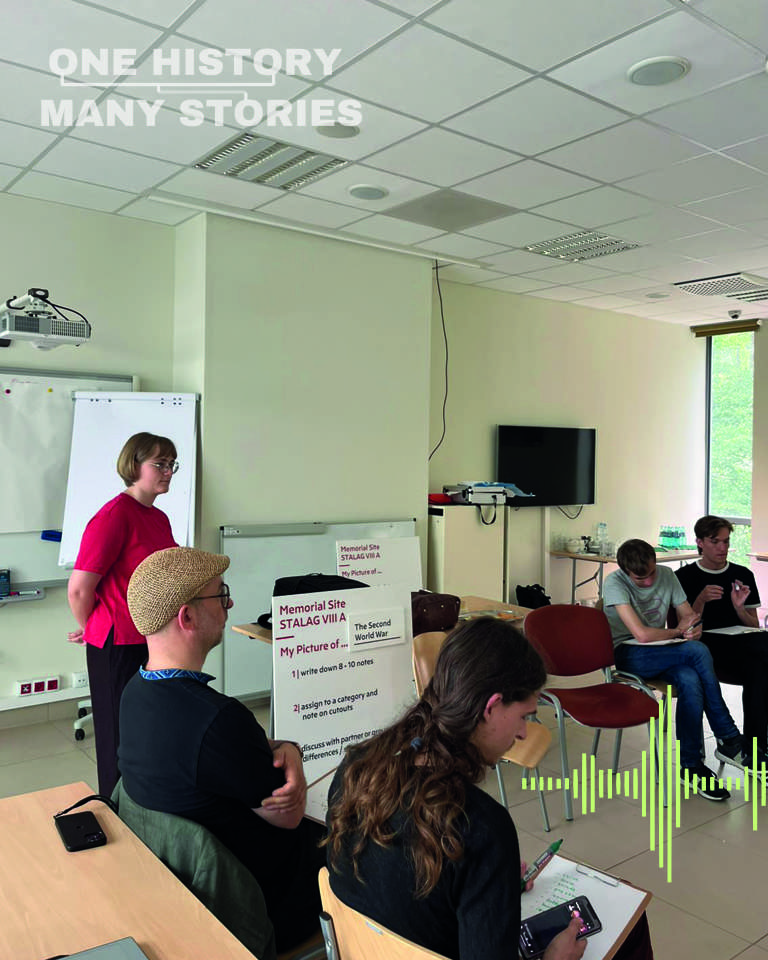
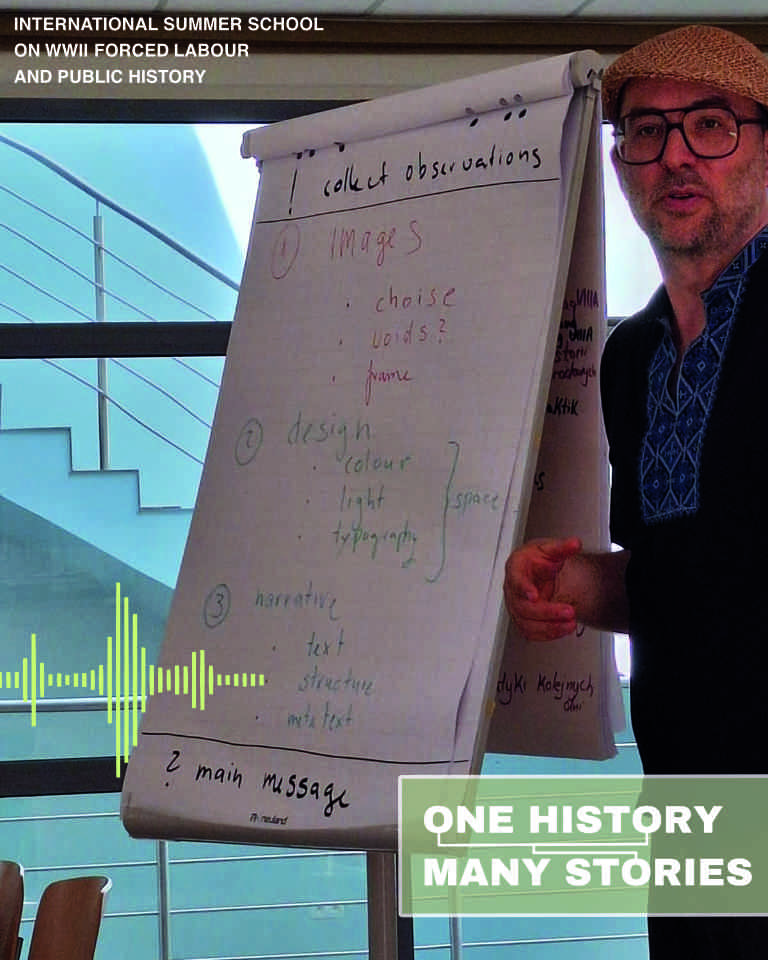
Public history was one of the key aspects of our project. The German historian Felix Ackermann introduced us to this field. Under his guidance we visited the exhibition “Görlitz im Nationalsozialismus.”
We analyzed its design, storytelling approach and overall message. We ended the day with a discussion comparing museum practices in Ukraine, Poland and Germany.
During a visit to the memorial site of Gross-Rosen in present-day Rogoźnica, we confronted the extremely harsh reality faced by forced labourers in German concentration camps. The visit was very emotional for the group.
One participant from Ukraine noted that this place—utterly devoid of humanity—is emotionally difficult to comprehend, yet she also realized that living under constant attack in Ukraine had caused her to develop a degree of emotional numbness.
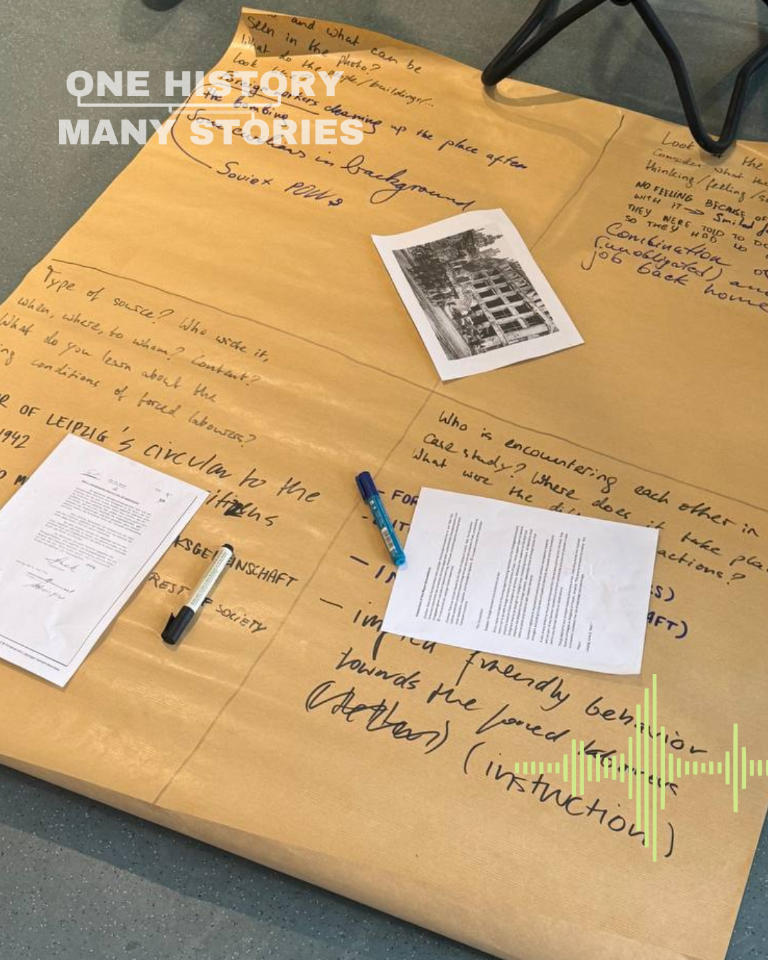
Continuing our research on Nazi forced labour, we visited the Gedenkstätte für Zwangsarbeit Leipzig. The workshop focused especially on the female perspective of forced labourers. Using a digital map, we explored several sites of forced labour. In small groups we studied various biographies using a range of sources.
Historian Daria Reznyk from the organization After Silence spoke about her work in the field of public history. She focused on marginalized groups, especially Ukrainian Ostarbeiters, emphasizing why their stories are often overlooked and how essential it is to make their fates visible.
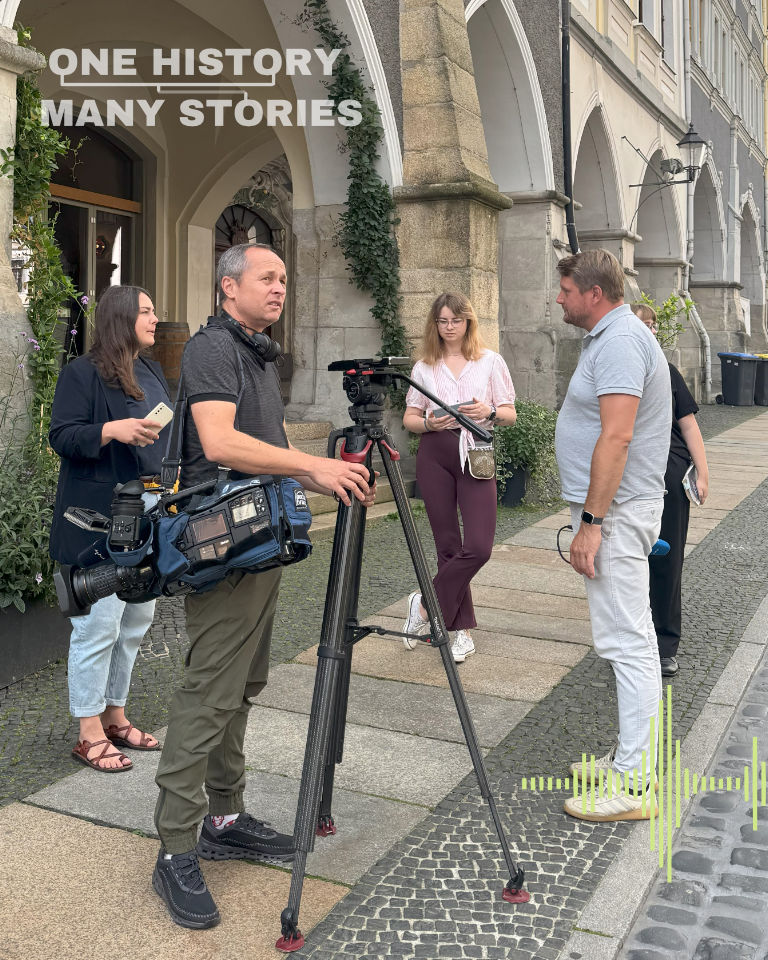
Our project has also attracted interest from the local community. In an interview with MDR Sachsenspiegel, Vitalina Voitenko spoke about her project focusing on her great-grandfather, who was forced to work in Saxony during WWII. Through her work she can now connect his story to the region.
Meanwhile, Luzie Kothera is working on a project about Polish poet and radio play author Zdzisław Nardelli, creating her own audio play as part of it.
Getting to know each other, exchanging ideas and practicing self-organization are essential aspects of our project. During morning and evening gatherings we also address personal topics and strengthen our connection as an international group. Ukrainian educator Vlada Hnatchenko supports this process by offering individual guidance and ensuring that we find balance between demanding topics and moments of rest.
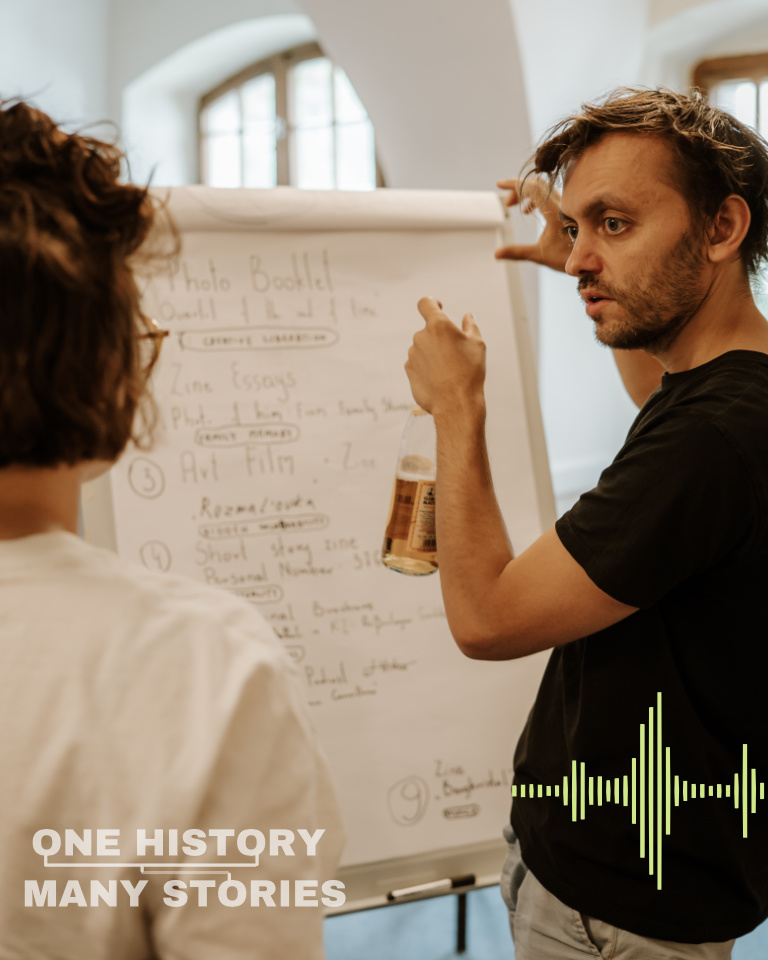
As we progressed in developing our individual projects, we began the day with an input session by Polish theatre and film director Damian Dąbek. He shared insights into the art of storytelling and provided tools for structuring our work, which sparked many new ideas.
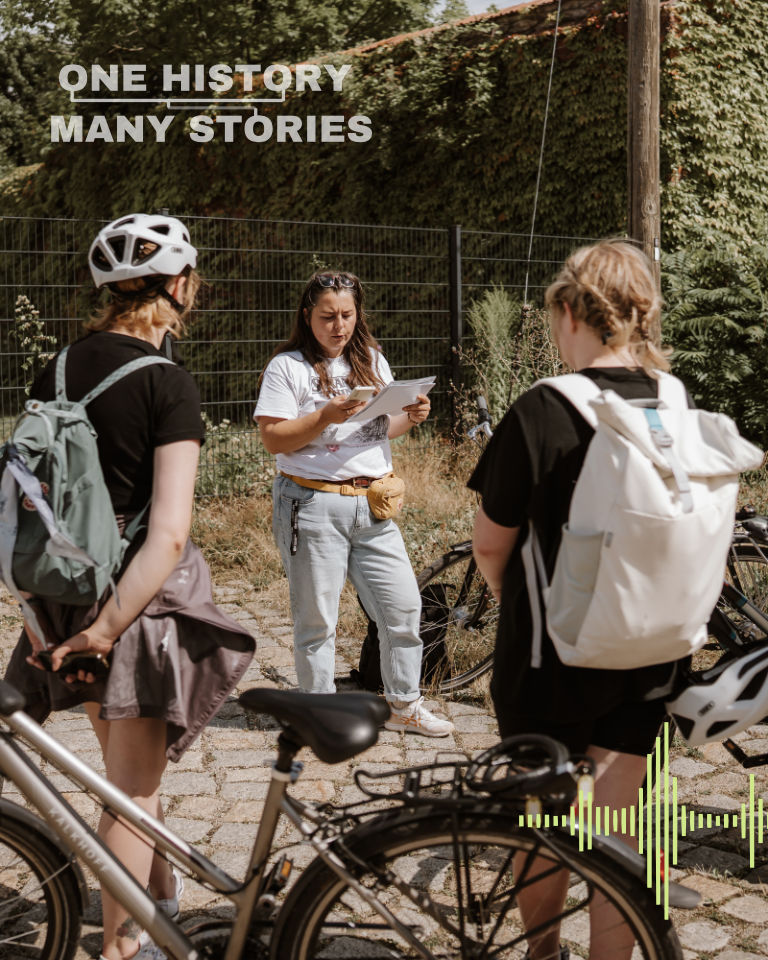
“One History – Many Stories” is dedicated to the personal stories of forced labourers who were treated inhumanely and whose fates often remain unknown. During a guided bike tour through Görlitz led by Alexandra Grochowski, we visited places of labour, despair and death that were once omnipresent in the city and throughout Germany.
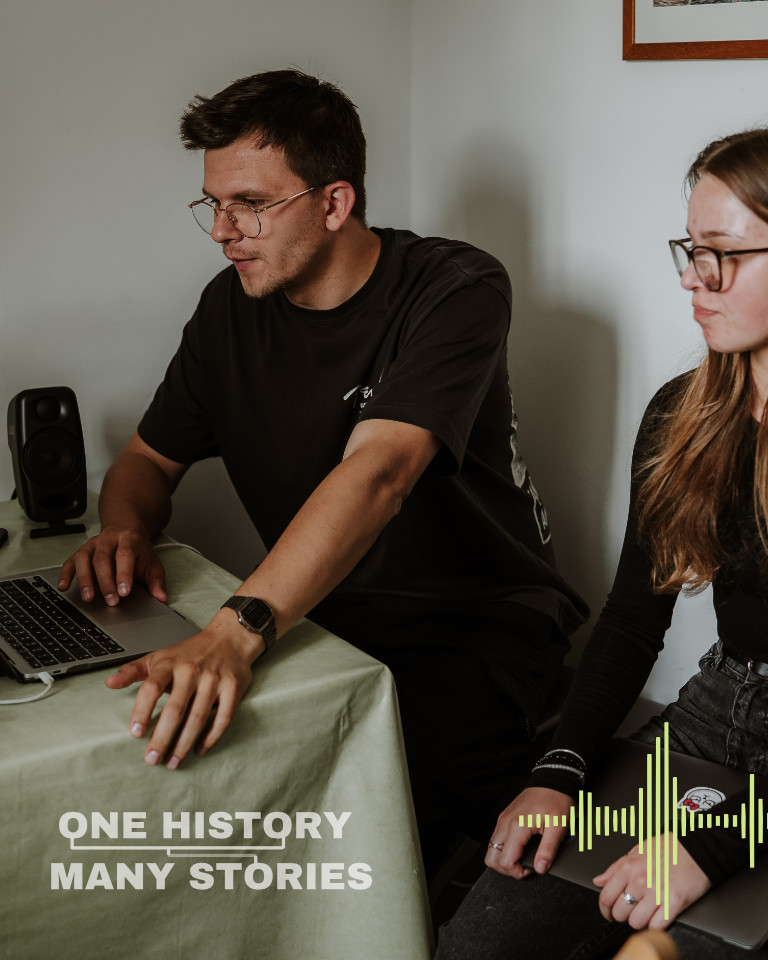
Digital creator Mikolaj Kolodziejczyk introduced us to techniques for producing digital content such as videos and podcasts. His expertise supported nearly every group in the realization of their projects. In the evenings, he enriched the atmosphere by sharing his talent as a pianist.
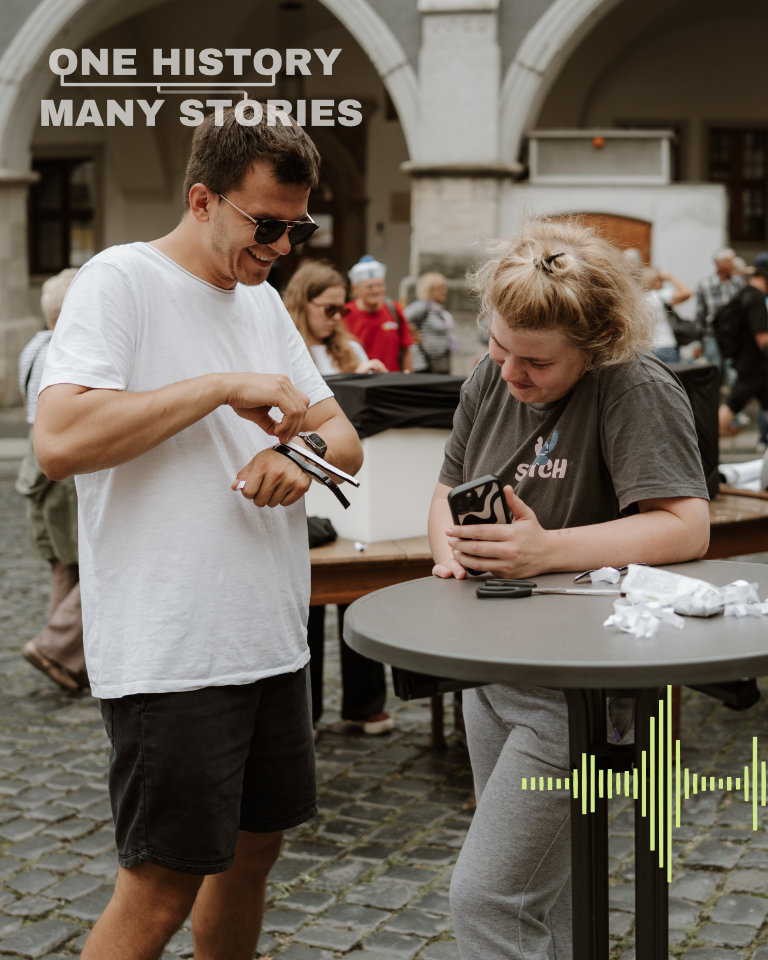
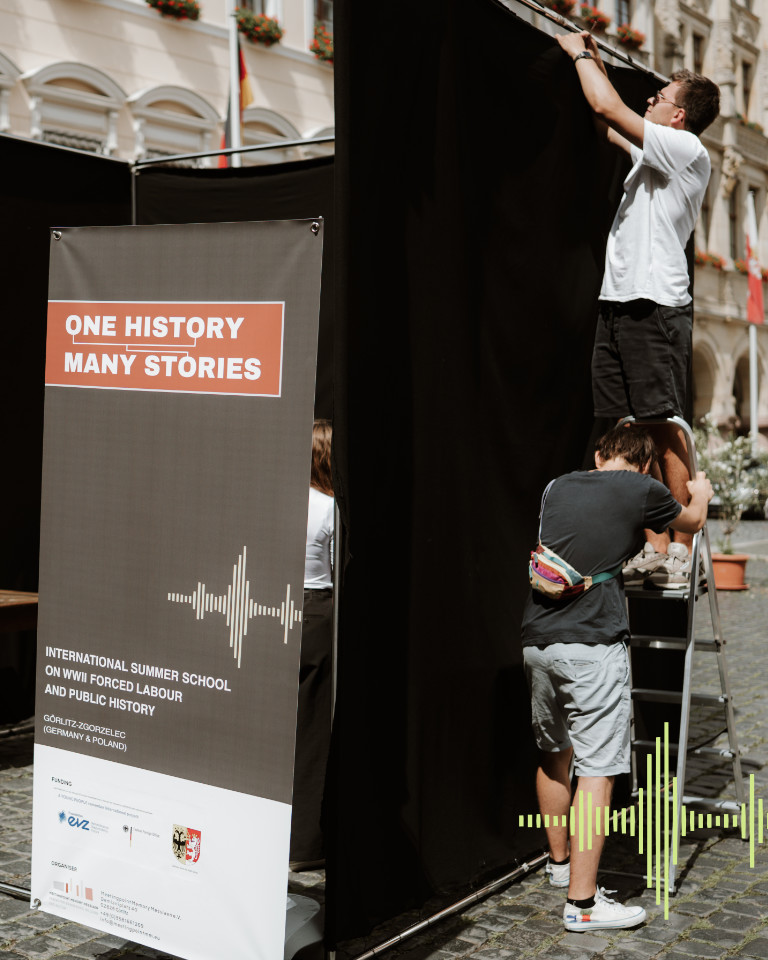
As our creative phase drew to a close, we began preparing for the joint presentation of our projects in Görlitz’s old town. In the form of a pop-up exhibition, we showcased the diverse outcomes of our work while finalizing the last details.
The exhibition was very well received by both residents and visitors.
Das Projekt wird von der Stiftung EVZ und dem Auswärtigen Amt im Rahmen des Programms JUGEND erinnert international gefördert.

Gefördert durch die Stadt Görlitz.

About:
“One History-Many Stories” is a historical-political education project that brings together young people from Germany, Poland and Ukraine to explore the history of Nazi forced labour by looking at the biographies of victims and their own family histories at authentic historical sites. Through field and archive research, creative workshops and discussions, the group develops multi-perspective narrative formats to promote dialogue, understanding and reconciliation. The project uses analog and digital methods and aims to build sustainable connections and use the knowledge gained in the modern world to strengthen a democratic Europe.
Project Dates: 24.07.-03.08.2025 exchange Program in GörlitZgorzelec (Germany, Poland), 21.08.2025 final online meeting
PROJECT FACTS
Who: People aged 18-27 from Germany, Poland and Ukraine
Where: European City of Görlitz-Zgorzelec (Germany and Poland)
What about: Research on Forced Labor and family history connected to WWII, creating a creative outlet with your findings
Places: Görlitz-Zgorzelec, Memorial Site Stalag VIII A Görlitz, Memorial Site Forced Labour Leipzig, Memorial Site KZ Groß-Rosen (Rogoznica)
Language: A good level of English is essential.
Accommodation: The group will live together in Peregrinus Herberge Görlitz, Langenstraße 37, 02826 Görlitz, where they will be responsible for self-organizing their group-life with the help of the team of organizers.
Costs: The project is funded by different outlets of the German Government, who will take over the participation fee 100% which includes accommodation, meals and workshop costs. Travel costs for participants from Ukraine will be refunded.
Activities: During the programme activities will consist of walks and also cycling. Please consider whether you are physically able to attend. If you are in need of assistance, please contact us.
How to apply: Apply by filling out this form. We will contact you for a short interview afterwards.
ORGANIZERS
Meetingpoint Memory Messiaen e.V. (DE)
The Meetingpoint Memory Messiaen refers in its work to the history and heritage of the former German prisoner-of-war camp Stalag VIII A Görlitz, today Zgorzelec. At this authentic site of Nazi crimes, the association uses multi-perspective and transnational forms of commemoration in the historical-political education of young people. At the memorial site, the association organizes not only international educational work but also conferences and research projects.
PARTNERS
After Silence «Після тиші» (UA)
The public organization after silence is an initiative created in 2021.
We work in the fields of memorial culture, public history and social anthropology to develop a critical understanding of Ukraine’s past and present.
Tools — field researches, oral history, digitization of private archives, documentaries, media presentation.
Focus — individual experiences and collective traumas, memory and postmemory.
Fundacja Pamięć, Edukacja, Kultura (PL)
As the host of the European Centre Memory, Education, Culture, the Foundation is responsible for the maintenance of both the Centre, and the remaining area of the former Stalag VIIIA and the Soviet POW Cemetery. Under its care is also the monument dedicated to the memory of the prisoners of Stalag, and the adjacent square. The Foundation organizes meetings, seminars and scientific conferences, exhibitions, concerts and workshops for young people and adults, as well as national holiday celebrations.
FUNDING
Das Projekt wird von der Stiftung EVZ und dem Auswärtigen Amt im Rahmen des Programms JUGEND erinnert international gefördert.
Gefördert durch die Stadt Görlitz.